
This was the 1st week of the NFL Combine training and core training started from the beginning. That means the main focus was diaphragmatic breathing with proper abdominal contraction and throacic mobility. The diaphragm forms a pliable dome at the top of the core (see picture from last blog). While the diaphragm's primary job is to help with respiration (ie the exchange of O2 for the body) it is also a powerful stabilizer. Teaching athletes the art of proper breathing is imperative to creating maximal core stabilization.
Thoracic (midback) and rib mobility can also be improved by practicing diaphragmatic breathing. Deep breathing increases rib expansion and thoracic flexion and extension. Slumping forward from daily activities increases back stiffness and decreases the overall rib and throacic mobility. This can lead to many problems such as back, shoulder and neck pain as well as headaches. Breathing properly with stretching will reinforce low back stabilization and increase thoracic mobility.
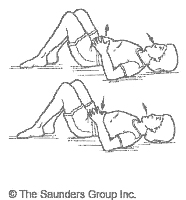
 In order to assess your breathing, lie on your back placing one hand on your chest and one hand on your belly. Take 4-5 deep long breaths. Which hand moves more? For proper breathing, breathe deeply down into the stomache moving that hand upward. The hand on the chest should barely, if not, move at all.
 Once you can breathe deeply into the stomache comfortably, try adding in breathing to abdominal exercises such as lower leg lowers or crunches or upper body exercises like bench and military presses. To add breathing to abdominal exercises, the concentric part of the exercise should be performed on the exhale (breath out). For instance, breathe deeply in and on a slow exhale lower the legs or crunch up. Feel the abdominals and back tighten as more and more air is expelled out of the lungs. This increases back stability via an abdominal brace without having to "flatten" the back. As you breathe in the legs would raise back up or if crunching, the shoulders would lower. Controlling the pace of the exercise with slow breathing improves the quality of the exercise and maximizes the strength gains.

No comments:
Post a Comment